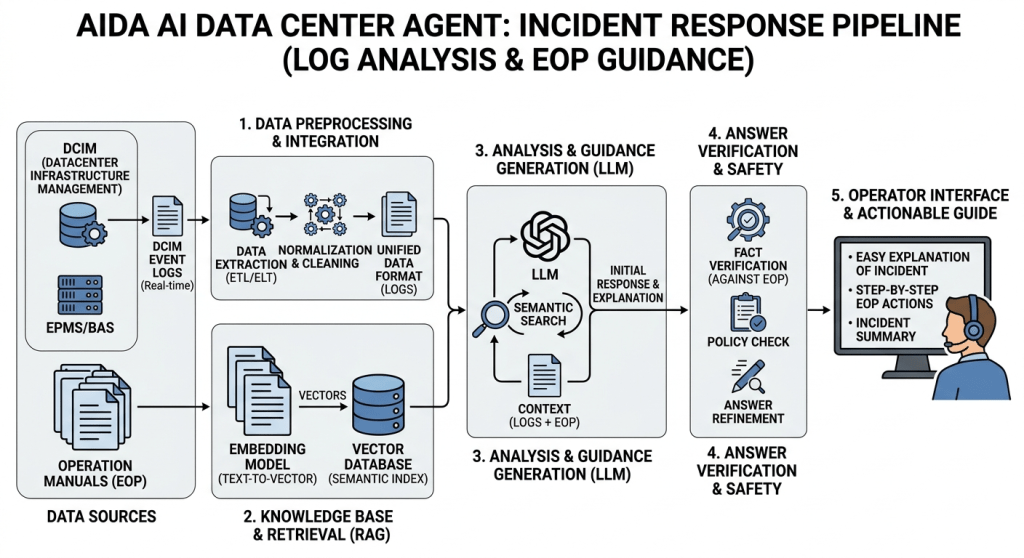
Just, made by talking with Gemini.
The Computing for the Fair Human Life.
Just, made by talking with Gemini.
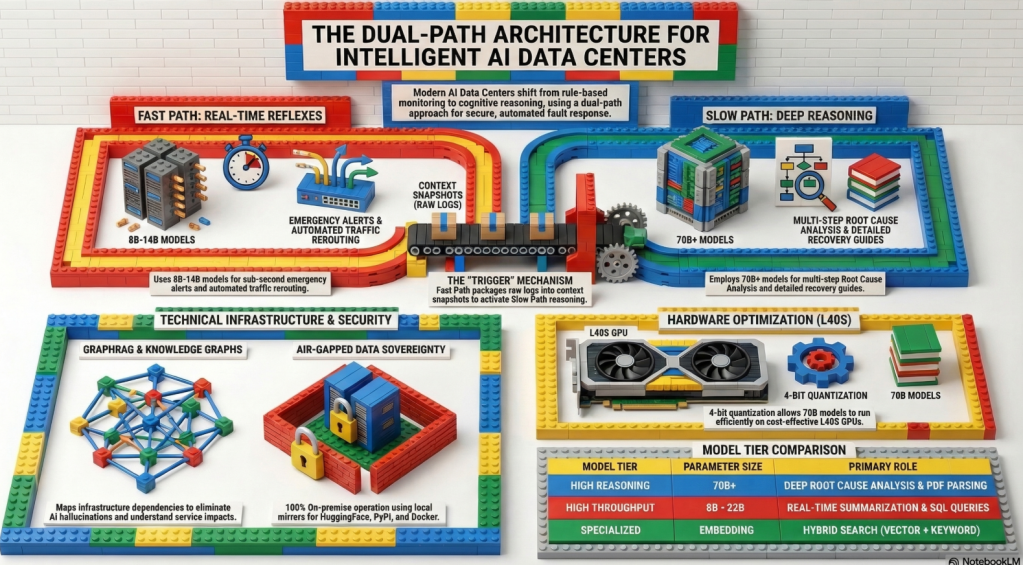
The proposed AI DC Intelligent Incident Response Platform upgrades traditional data center monitoring to an “Autonomous Operations” system within a secure, air-gapped on-premise environment. It features a Dual-Path architecture that utilizes lightweight LLMs for real-time automated alerts (Fast Path) and high-performance LLMs with GraphRAG for deep root-cause analysis (Slow Path). By structuring fragmented manuals and comprehensively mapping infrastructure dependencies, this system significantly reduces recovery time (MTTR) and provides a highly scalable, cost-effective solution for hyper-scale AI data centers
With NotebookLM

This image is a diagram titled “Platform” that explains three types of platform business models.
3 Platforms:
Bottom Integrated Concept:
Key Message: This diagram demonstrates that platforms are not neutral technologies but embody different power relationships and value distribution structures. The second type particularly critiques the structural problems of platform labor, revealing that despite the surface narrative of “creating value together,” unequal power relationships actually exist. This is a critical visualization that analyzes the various interests and power structures hidden behind the platform economy.
With Claude
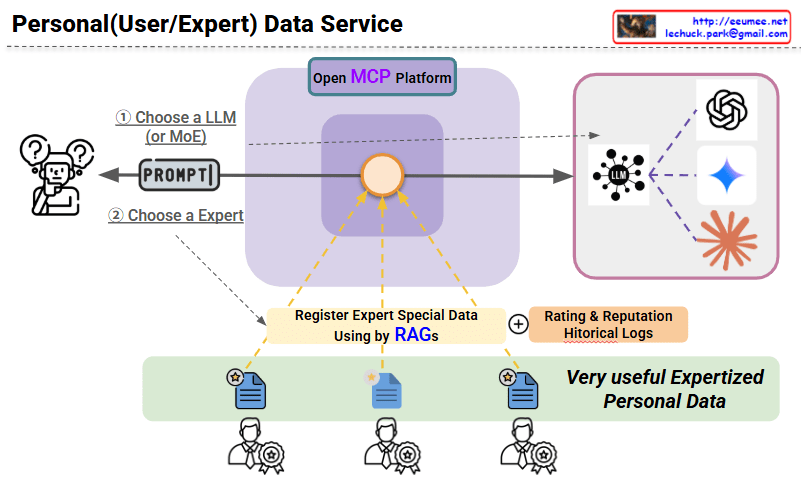
The Personal Data Service is an open expert RAG service platform based on MCP (Model Context Protocol). This system creates a bidirectional ecosystem where both users and experts can benefit mutually, enhancing accessibility to specialized knowledge and improving AI service quality.
With Claude
With Claude
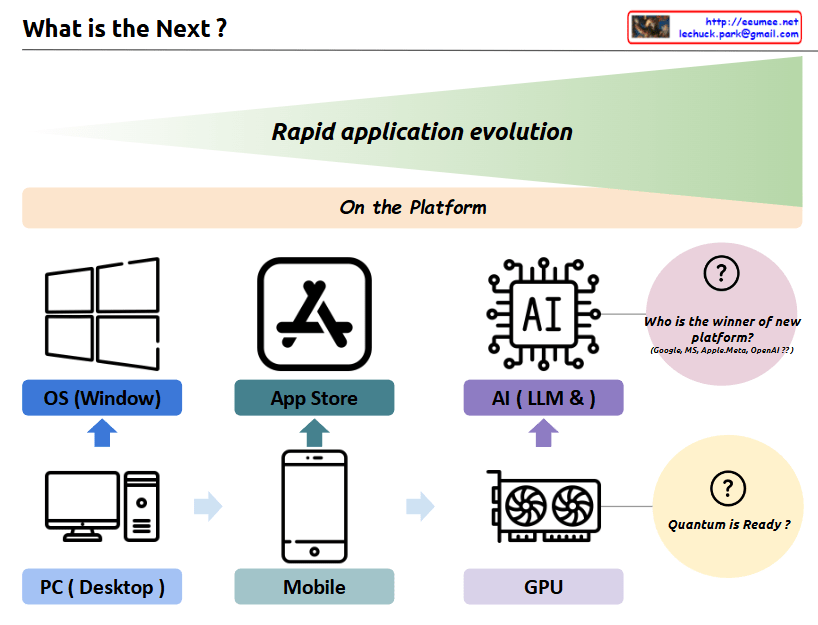
a comprehensive interpretation of the image and its concept of “Rapid application evolution”:
The diagram illustrates the parallel evolution of both hardware infrastructure and software platforms, which has driven rapid application development and user experiences:
The symbiotic relationship between these two axes:
Each transition has led to exponential growth in application capabilities and user experiences, with hardware and software platforms developing in parallel and reinforcing each other.
Future Outlook:
This cyclical pattern of hardware-software evolution suggests that we’ll continue to see new infrastructure innovations driving platform development, and vice versa. Each cycle has dramatically expanded the possibilities for applications and user experiences, and this trend is likely to continue with future technological breakthroughs.
The key insight is that major technological leaps happen when both hardware infrastructure and software platforms evolve together, creating new opportunities for application development and user experiences that weren’t previously possible.

From perplexity with some prompting
The image explains the “Golden Circle for DC Operation,” focusing on optimizing data center operations.
This structure emphasizes efficiency, standardization, and a data-centric approach to data center operations.

From Claude with some prompting
This diagram illustrates the importance of standardization and platform development, highlighting two key objectives:
This structure offers several advantages:
In conclusion, this diagram visually represents two core strategies: establishing data reliability through standardization and enabling efficient service improvement and expansion through a dedicated platform. It emphasizes how standardization allows teams to trust and focus on using the data, while the platform makes it easier to improve existing services and develop new ones.
 Lechuck Park