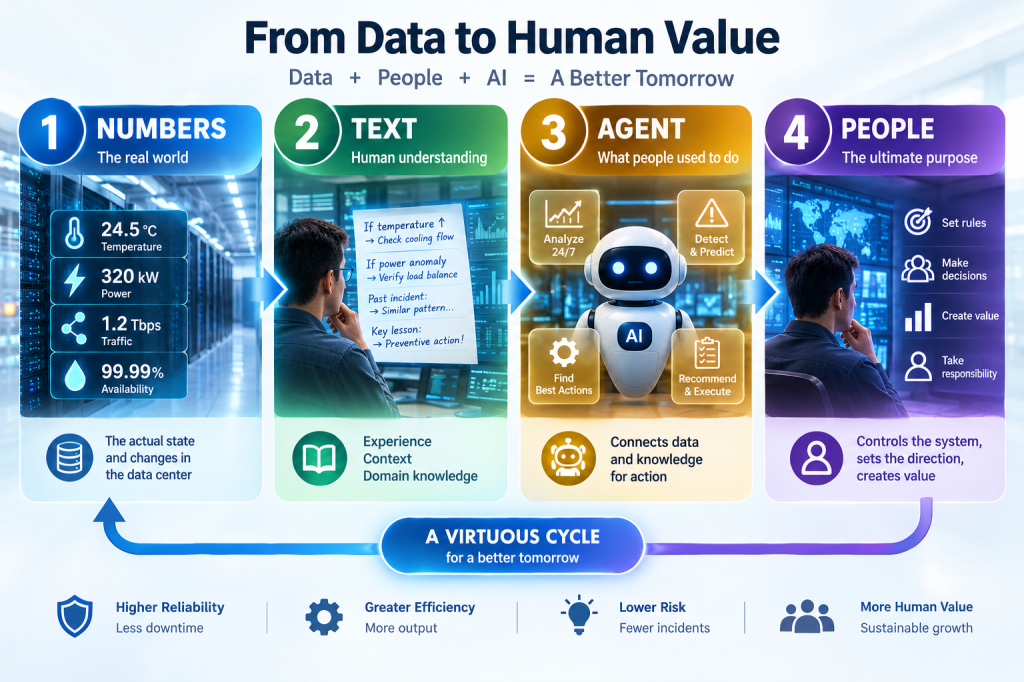
From Data to Human Value
The Computing for the Fair Human Life.
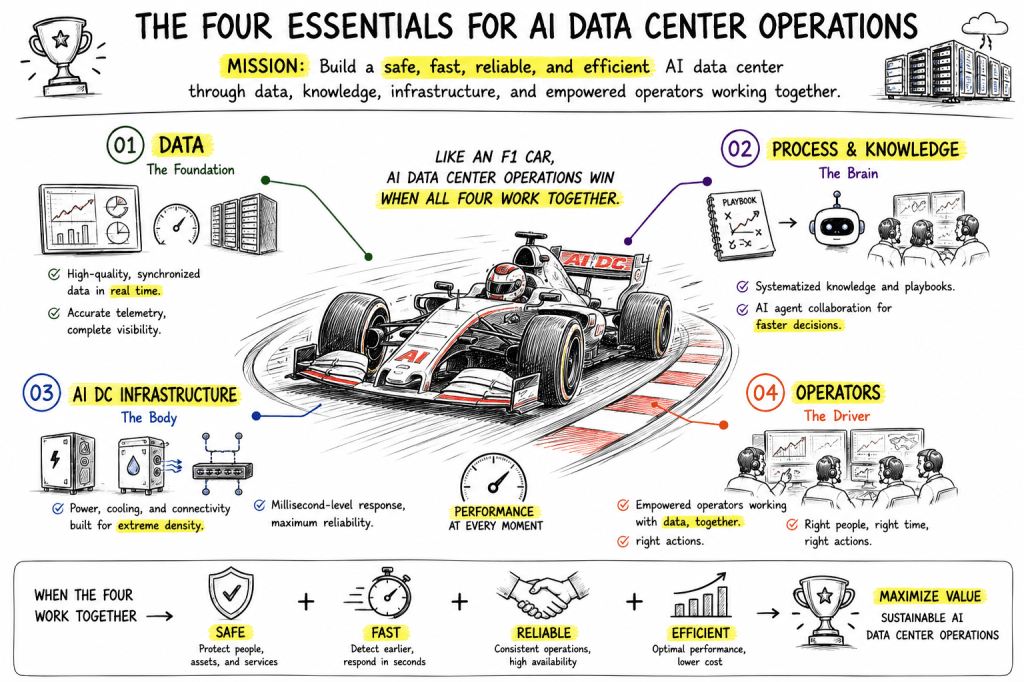
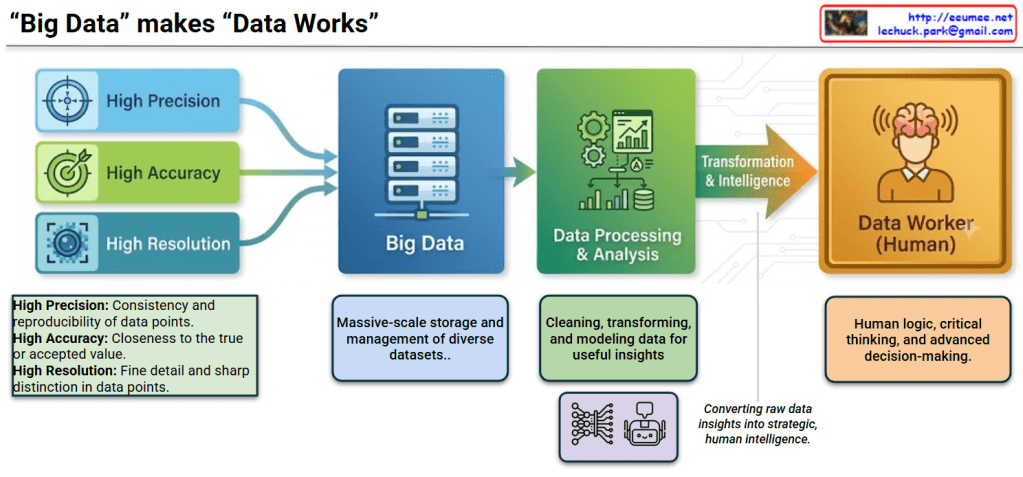
The image illustrates the workflow of data processing and utilization under the title “Data” makes “Data Works”. It breaks down the journey from raw data input on the left to human decision-making on the right into four distinct stages.
Step 1: Data Attributes (Input Stage) On the far left, three essential attributes of high-quality data are shown feeding into the Big Data system:
Step 2: Big Data (Storage & Management)
Step 3: Data Processing & Analysis
Step 4: Transformation & Intelligence ➔ Data Worker (Human)
This diagram illustrates the comprehensive workflow of modern data science. It shows how highly precise, accurate, and high-resolution data is collected into Big Data systems, processed and modeled using analytical and AI tools, and ultimately transformed into actionable intelligence that empowers a human Data Worker to apply critical thinking and make strategic decisions.
#BigData #DataAnalysis #DataScience #ArtificialIntelligence #DataWorker #DecisionMaking #DataVisualization
With Gemini
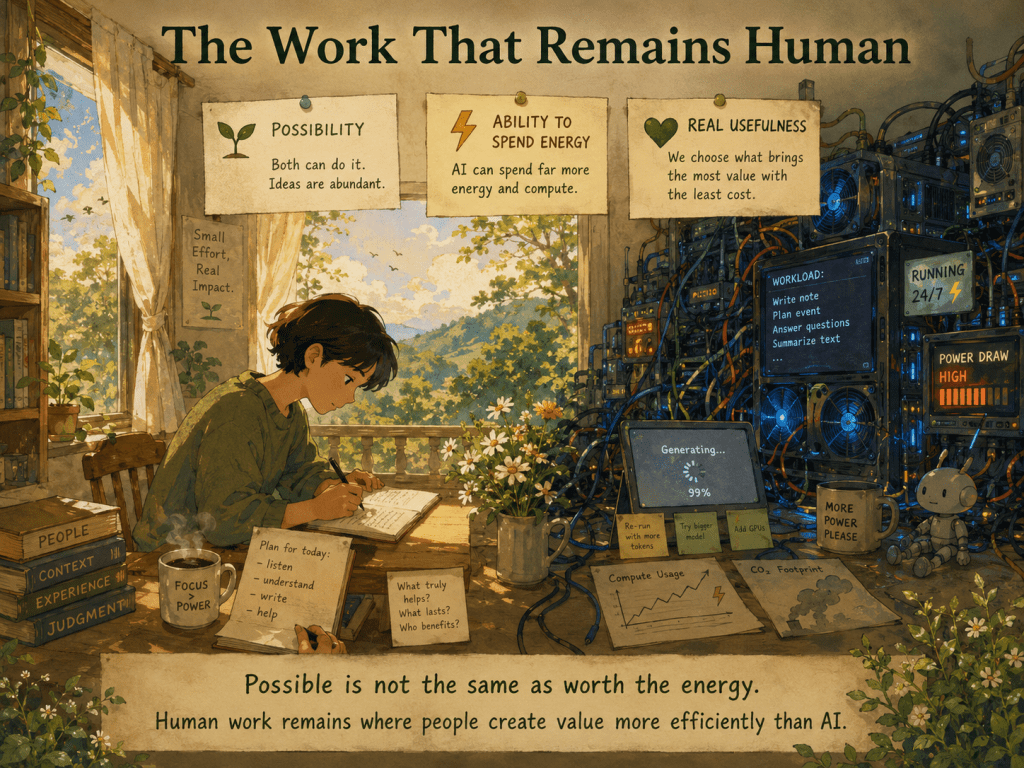
Possible is not the same as worth the energy.
Human work remains where people create value more efficiently than AI.
With ChatGPT
Just, made by talking with Gemini.

The left side outlines the fundamental building blocks of a DPU, detailing how tasks are distributed across its hardware:
The right side highlights how these hardware components translate into tangible infrastructure benefits:
This infographic perfectly illustrates how DPUs transform server architectures by offloading critical network, storage, and security tasks to specialized hardware. By isolating infrastructure management from core compute resources, DPUs maximize overall efficiency, making them an indispensable foundation for a high-performance AI Data Center Integrated Operations Platform.
#DPU #DataProcessingUnit #NetworkOffloading #SmartNIC #FPGA #ZeroTrust #CloudInfrastructure

This diagram illustrates the “Computing Evolutions” from the perspective of data’s core attributes development.
Top: Core Data Properties
Bottom: Evolution Stages Centered on Each Property
Convergence to AI Era With data prepared through the Internet and computing infrastructure ready through the cloud, all these elements converged to enable the current AI era. This evolutionary process demonstrates how each technological foundation systematically contributed to the emergence of artificial intelligence.
#ComputingEvolution #DigitalTransformation #AIRevolution #CloudComputing #TechHistory #ArtificialIntelligence #DataCenter #TechInnovation #DigitalInfrastructure #FutureOfWork #MachineLearning #TechInsights #Innovation
With Claude
 Lechuck Park