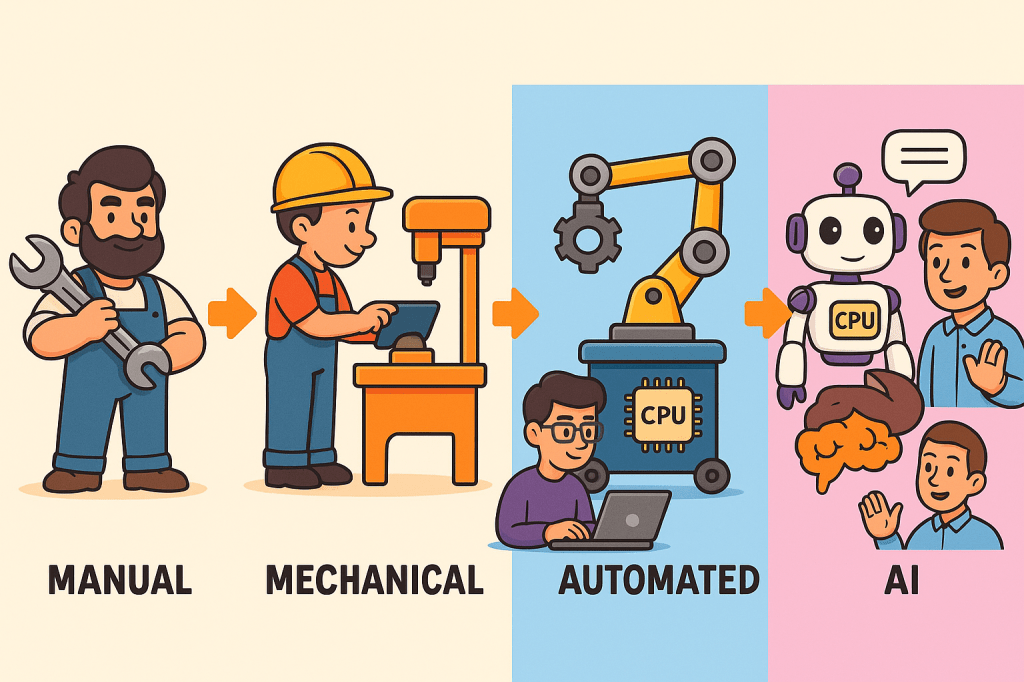
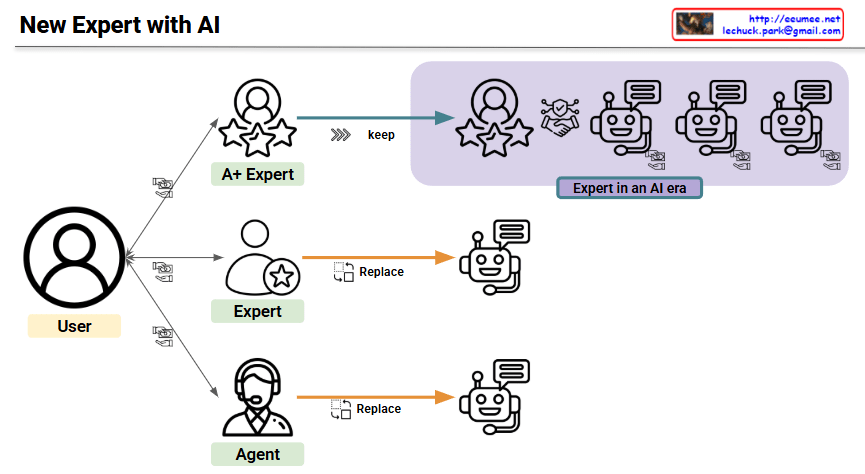
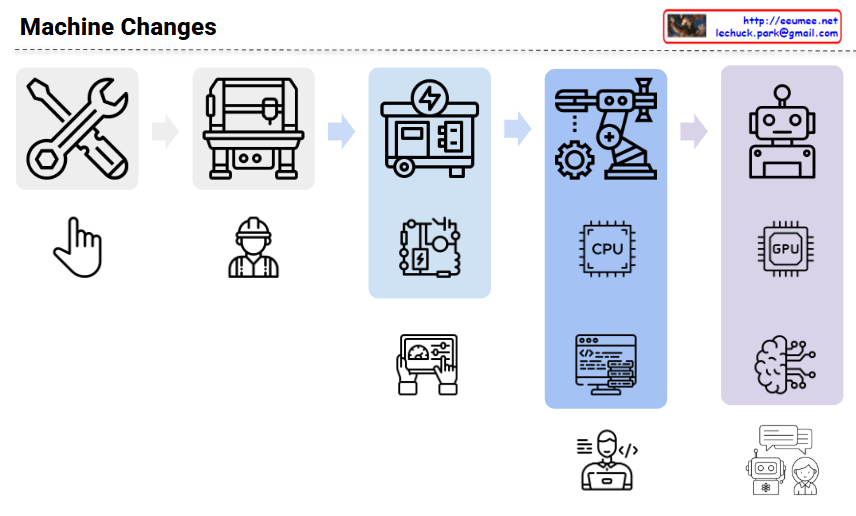
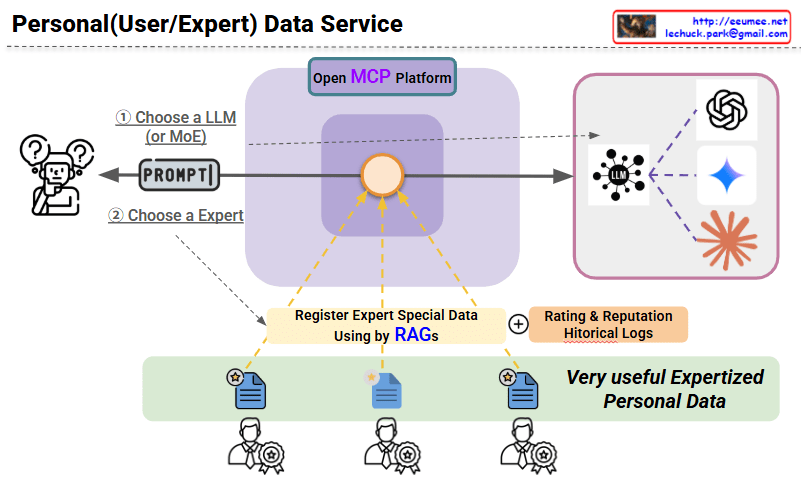
The moment AI surpasses humans will come only if the human brain is proven to be finite. If every neural connection, every thought pattern, and every emotional process can be fully analyzed and translated into code, then AI, with its capacity to process and optimize those codes, can ultimately transcend human capability. But if the human brain contains layers of complexity that are infinite or fundamentally unquantifiable, then no matter how advanced AI becomes, it will always fall short of complete understanding—and thus remain behind
The attention mechanism in Transformer models is a revolutionary technology that has transformed the field of natural language processing. This technique allows each word (token) in a sentence to form direct relationships with all other words.
Working Principles
Tokenization Stage: Input text is divided into individual tokens.
Attention Application: Each token calculates its relevance to all other tokens.
Mathematical Implementation:
Each token is converted into Query, Key, and Value vectors.
The relevance between a specific token (Query) and other tokens (Keys) is calculated.
Weights are applied to the Values based on the calculated relevance.
This is expressed as the ‘sum of Value * Weight’.
Multi-Head Attention
Definition: A method that calculates multiple attention vectors for a single token in parallel.
Characteristics: Each head (styles A, B, C) captures token relationships from different perspectives.
Advantage: Can simultaneously extract various information such as grammatical relationships and semantic associations.
Key Benefits
Contextual Understanding: Enables understanding of word meanings based on context.
Long-Distance Dependency Resolution: Can directly connect words that are far apart in a sentence.
Parallel Processing: High computational efficiency due to simultaneous processing of all tokens.
Applications
Transformer-based models demonstrate exceptional performance in various natural language processing tasks including machine translation, text generation, and question answering. They form the foundation of modern AI models such as GPT and BERT.
This diagram titled “AI together!!” illustrates a comprehensive architecture for AI-powered question-answering systems, focusing on the integration of user data, tools, and AI models through standardized protocols.
Key Components:
Left Area (Blue) – User Side:
Prompt: The entry point for user queries, represented by a UI interface with chat elements
RAG (Retrieval Augmented Generation): A system that enhances AI responses by retrieving relevant information from user data sources
My Data: User’s personal data repositories shown as spreadsheets and databases
My Tool: Custom tools that can be integrated into the workflow
Right Area (Purple) – AI Model Side:
AI Model (foundation): The core AI foundation model represented by a robot icon
MOE (Mixture Of Experts): A system that combines multiple specialized AI models for improved performance
Domain Specific AI Model: Specialized AI models trained for particular domains or tasks
External or Internet: Connection to external knowledge sources and internet resources
Center Area (Green) – Connection Standard:
MCP (Model Context Protocol): A standardized protocol that facilitates communication between user-side components and AI models, labeled as “Standard of Connecting”
Information Flow:
Questions flow from the prompt interface on the left to the AI models on the right
Answers are generated by the AI models and returned to the user interface
The RAG system augments queries with relevant information from the user’s data
Semantic Search provides additional connections between components
All interactions are standardized through the MCP framework
This architecture demonstrates how personal data and custom tools can be seamlessly integrated with foundation and specialized AI models to create a more personalized, context-aware AI system that delivers more accurate and relevant responses to user queries.
This “Nice Action” diagram illustrates how decision-making processes work similarly for both humans and AI:
Dual Structure of All Choices: Every decision inherently consists of elements of certainty and uncertainty.
Certainty Expansion Strategy: The first step “① Expansion ‘Certain’ First” demonstrates the strategy of maximizing the use of already certain information. This establishes a foundation for decision-making based on known facts.
Uncertainty Upgrade: The second step “② Upgrade Possibility to near 100%” represents the process of increasing the probability of uncertain elements to bring them as close as possible to certainty. While complete certainty cannot be achieved for all elements, obtaining sufficiently high probability enhances the reliability of decisions.
Similarity to Machine Learning and AI: This decision-making model is remarkably similar to how modern machine learning and AI function. AI systems also operate based on certain data (learned patterns) and use probabilistic approaches for uncertain elements to derive optimal decisions.
Transition to Action: Once sufficient certainty is established, the final “ACTION” step can be taken to implement the decision.
This diagram provides insight into how human intuitive decision-making and AI’s algorithmic approach fundamentally follow the same principle—maximizing certainty while managing uncertainty to an acceptable level. The “AI, too” notation explicitly emphasizes this similarity.
This diagram titled “Make Better Questions” illustrates a methodology for effective questioning. The key concepts are:
Continuous Skepticism and Updates: Personal beliefs should be continuously updated following the principle “Always be suspicious.” This suggests that our knowledge and understanding should not remain static but should evolve constantly.
Fluidity of Collective Truth: “Humans Believe (Truth)” represents collectively accepted truths, which are also subject to change and interact with personal beliefs through “Nice Update,” creating a reciprocal influence.
Immutable Foundations: Some basic principles (“Immutable Rule”) provide an unchanging foundation, but flexible thinking should be developed based on these foundations.
Starting with Fundamentals: “Start with fundamentals” emphasizes the importance of beginning with basic principles when approaching complex questions or problems.
Collaboration with AI: By utilizing this thinking framework in conjunction with AI, we can create better questions and gain richer insights.
This diagram ultimately suggests a method for optimizing interactions with AI through constant skepticism and adherence to fundamentals while maintaining flexible thinking. It emphasizes the importance of not settling for fixed beliefs but continuously learning and evolving.