Event & Alarm

From DALL-E with some prompting

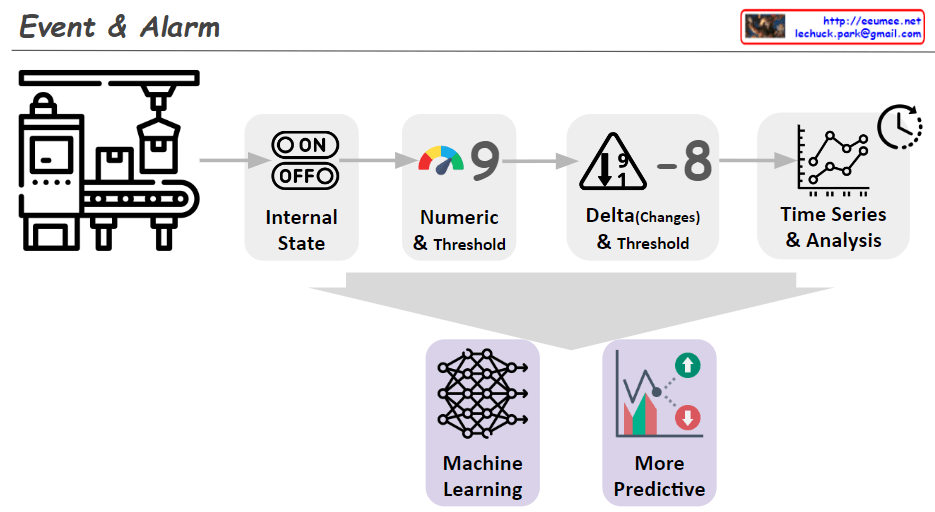
The image illustrates the progressive stages of detecting alarm events through data analysis. Here’s a summary:

  1. Internal State: It shows a machine with an ‘ON/OFF’ state, indicating whether the equipment is currently operating.
  2. Numeric & Threshold: A numeric value is monitored against a set threshold, which can trigger an alert if exceeded.
  3. Delta (Changes) & Threshold: A representation of an alert triggered by significant changes or deviations in the equipment’s performance, as compared to a predefined threshold.
  4. Time Series & Analysis: This suggests that analyzing time-series data can identify trends and forecast potential issues.
  5. Machine Learning: Depicts the use of machine learning to interpret data and build predictive models.
  6. More Predictive: The final stage shows the use of machine learning insights to anticipate future events, leading to a more sophisticated alarm system.

Overall, the image conveys the evolution of alarm systems from basic monitoring to advanced prediction using machine learning.

Anomaly Connection Detection #0

from DALL-E with some prompting
The image seems to illustrate the concept of anomaly detection in network security. A user is shown with a green line leading to a server, indicating normal interaction, while a red line leading from a network criminal suggests malicious activity. The network architecture is in place to mirror and tap into the data traffic, allowing for the steering of packets for closer inspection. An alert (!!) signifies the detection of an anomaly. Below, details of what is monitored are given: raw or sampled packets, TCP/IP 5-tuples, geographic IP locations, bandwidth, and new detection areas including DNS and HTTP header information. This represents a multifaceted approach to identifying and responding to potential security threats within a network.

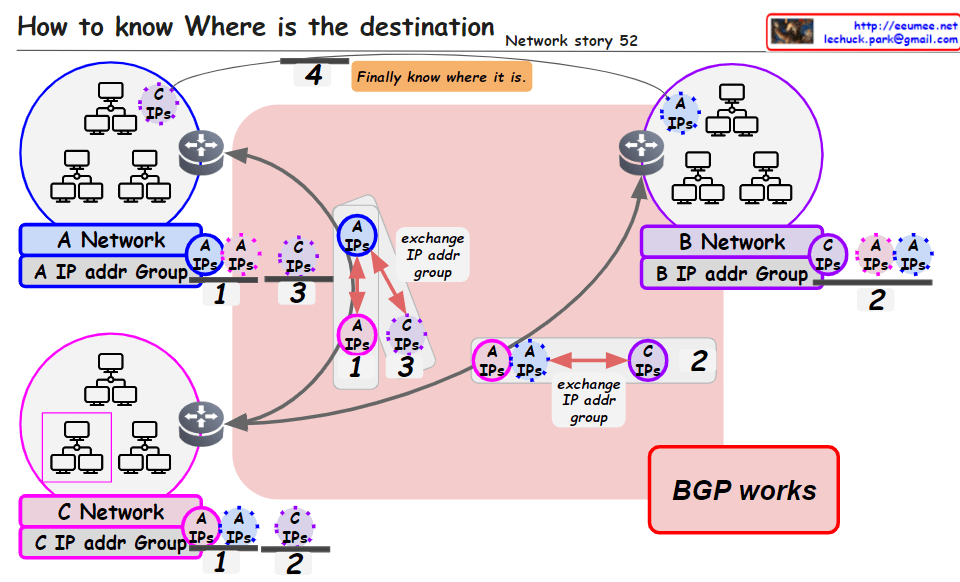
Where it is?

From Bard with some prompting

1. The sender sends a packet using the destination IP address.

2. Routers use the destination IP address to determine the path to forward the packet.

3. Routers use the BGP protocol to share routing information with other routers.

4. The packet travels through multiple routers until it reaches the destination network.

5. The router in the destination network uses the destination IP address to forward the packet to the destination host.

6. The destination host receives and processes the packet.

Note:

  • This summary only explains the basic concepts, and the actual network environment can be more complex.
  • For more information, please refer to networking books or websites.


3 for Datacenter

From DALL-E with some prompting
This image visually represents “3 Key Strategies for DC Operation.”

  1. Transform
    • Digitalization: Transitioning data centers to digital technology.
      • KPI (Key Performance Indicators)
      • PUE (Power Usage Effectiveness) & Monitoring
      • Automation
      • Data API Service
  2. Use
    • Data Platform: Establishing platforms for data management and utilization.
      • Standardization
      • Platform
      • Continuous Upgrade
      • New!!
  3. Verify
    • AI: Validating efficiency and performance of data centers through AI.
      • Real AI
      • Early Warning
      • Energy Operation

These three strategies are interconnected with three objectives: “Experience to Digital,” “Continuous Innovation,” and “AI DC Now!!” This illustrates that the operation of data centers is moving towards impacting humans through digitalization, innovation, and the application of AI technology, driving transformation across the industry.

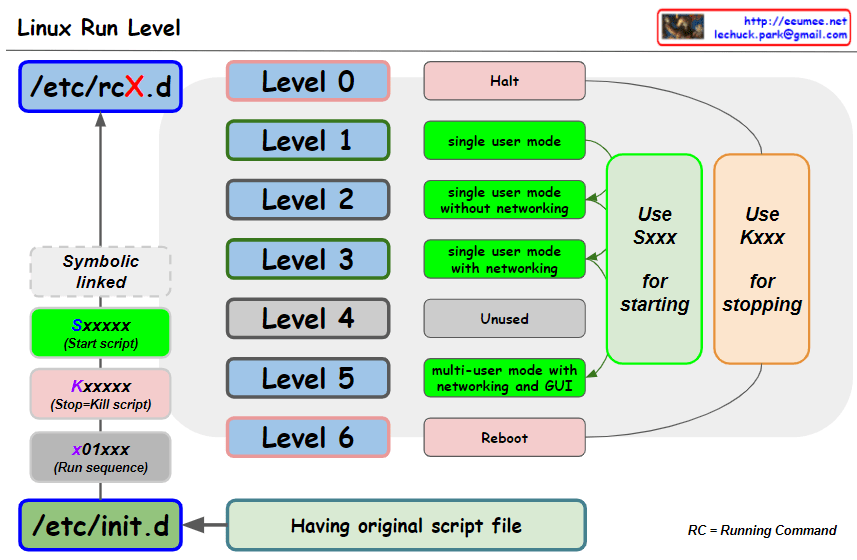
Linux RUN LEVEL

From DALL-E with some prompting
The image describes the Linux Run Levels, which are modes of operation in Unix-like operating systems. It explains the directories /etc/rcX.d where X is the run level number, and /etc/init.d which contains the original script files. The various levels are highlighted:

  • Level 0: Halt the system.
  • Level 1: Single user mode.
  • Level 2: Single user mode without networking.
  • Level 3: Single user mode with networking.
  • Level 4: Unused.
  • Level 5: Multi-user mode with networking and GUI.
  • Level 6: Reboot.

Scripts starting with S are used to start services, and those starting with K are used to stop services. The scripts are symbolically linked and have a naming convention that usually starts with S or K followed by a number indicating the order of execution.

IP network

From DALL-E with some prompting
The image presents an overview of IP network operation, emphasizing that there are two main methods by which data moves across the network. The focus is on the second method, where:

  • IP Address: Acts as the unique identifier within the internet, similar to a physical address in the real world.
  • Transmission Devices: These are network devices like switches and routers that facilitate the movement of data packets through the network.
  • Packets and Physical Connections: Data packets are routed based on their IP addresses through physical connections established within the network infrastructure.

The core message is that in an IP network, data doesn’t move on its own; it is routed based on IP addresses through devices that make the transport decisions, highlighting the importance of network infrastructure in the efficient delivery of data packets to their intended destinations.