

The Computing for the Fair Human Life.
From DALL-E with some prompting
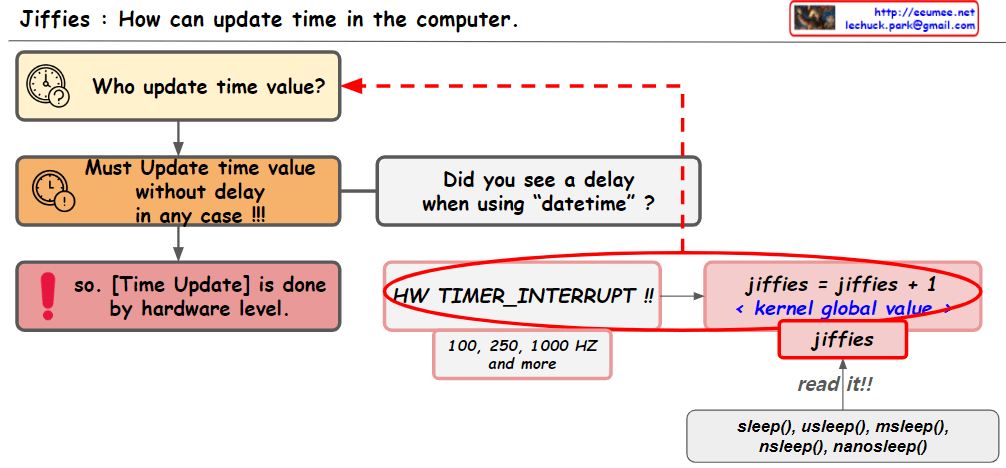
The image provides an explanation of how time updates are handled in computer systems. The key points include:
read() function, and functions like sleep(), usleep(), msleep(), nsleep(), and nanosleep() utilize this jiffies value to pause the execution of a program for a certain amount of time.The image visually represents the concept of how the operating system’s kernel manages time and how time-related functions use the system’s “jiffies” value.
From DALL-E with some prompting
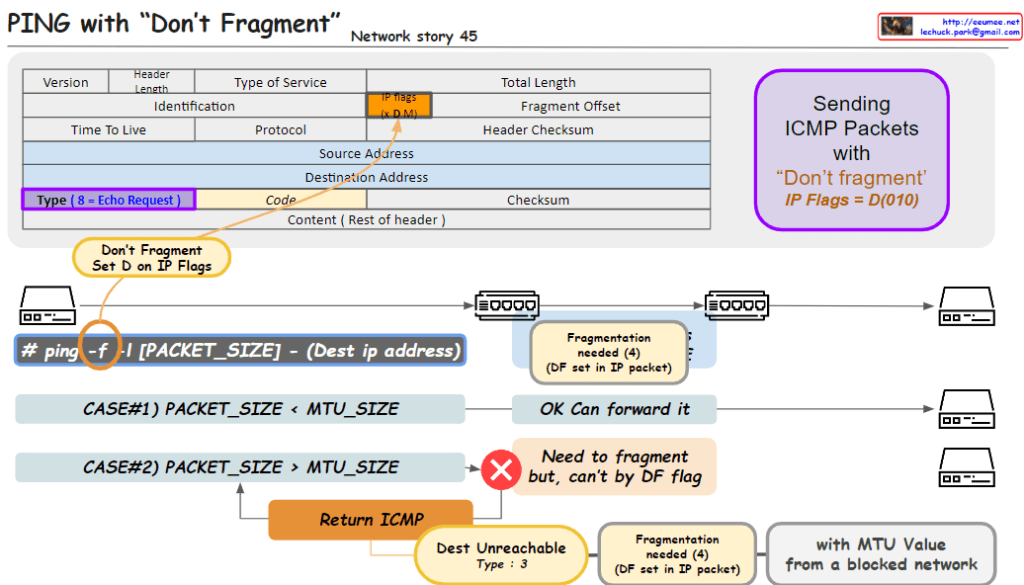
The image outlines a networking concept involving the transmission of ICMP (Internet Control Message Protocol) packets with the “Don’t Fragment” flag set, which is part of the IP (Internet Protocol) flags. Here’s a breakdown of the key elements in the image:
ping -f is used to send a ping with the DF flag set, which means the packets should not be fragmented, even if their size exceeds the MTU (Maximum Transmission Unit) of the network path.This image is a guide to understanding how the “Don’t Fragment” flag in IP packets affects their transmission over networks and how ICMP is used for error reporting when the flag is set.

From DALL-E with some prompting
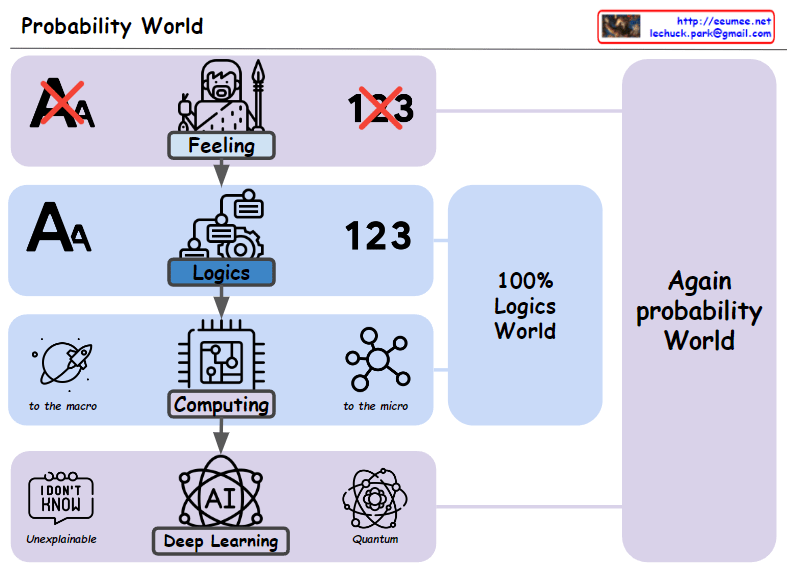
The image depicts the evolution of human experience and perception, starting from feelings and emotions, progressing to the world of logic and numbers for clarity, then advancing to complex computations and data processing, and finally delving into realms that require deeper understanding, like quantum mechanics, exploring the boundaries between what is known and unknown.
The top section labeled “Feeling” symbolizes the subjective and intuitive world of human experience, while the adjacent “1×3” represents the uncertainty of inaccurate calculations or outcomes. “Aa” and “123” represent clear and concrete understanding obtained through objective and logical thought. “Computing” signifies complex calculations and processing in both the macro and micro worlds, and “AI” and “Deep Learning” symbolize advanced technologies performing such complex calculations. Lastly, “Quantum” represents realms beyond our current scientific understanding, and the return to the “Again probability World” suggests that our knowledge and understanding can still be probabilistic and incomplete.
This diagram visually expresses the continuous cycle of human understanding evolving from emotions to logic, and then to the unknown, indicating that the journey of discovery and comprehension is an ongoing process.

From DALL-E with some prompting
The image represents the digital transformation process in data center operations. The top section labeled ‘AI/DT Services’ showcases a variety of Artificial Intelligence and Digital Transformation services including predictive analytics, energy management, reliability, automation, and customer engagement. These services contribute to establishing service standards and ensure the services stay updated through continuous improvements.
The middle section, ‘Data Processing,’ covers the processes involved in data collection, transformation (ETL), and visualization. These processes are responsible for data control, verification through the network, and feeding into an analysis platform.
The bottom section, ‘DC Facility,’ illustrates the fundamental infrastructure of a data center, including power supply, cooling systems, security, CCTV, and fire detection, which are essential for the efficient operation of a data center.
All three sections are underpinned by a ‘Data-Driven Process’ and suggest a transition from legacy processes to modern, data-centric operations through ‘Digital Trans’ (presumably short for Digital Transformation).

From DALL-E with some prompting
this image illustrates the concept of ‘Synchronization’. Synchronization is a mechanism used to ensure that when multiple processes or threads share data, they all have a consistent view of that data. If each edit were made to shared data concurrently, it could lead to inconsistent data states. The image contrasts ‘Not Same State’ with ‘Same State’, suggesting that only one process at a time should be able to modify shared data to maintain consistency.

