ICMP WHY

From DALL-E with some prompting
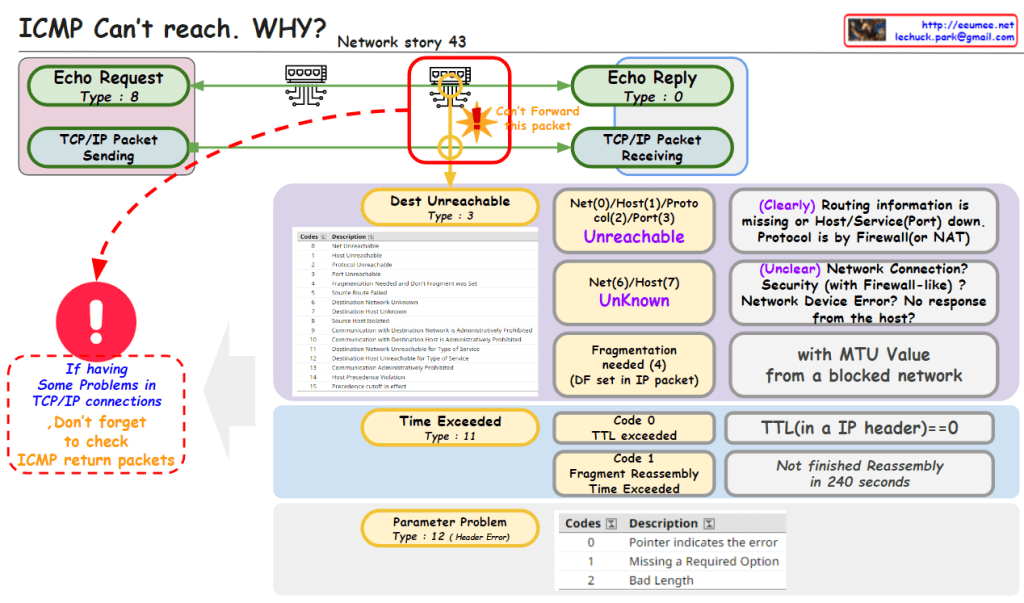
The image is an educational diagram explaining different ICMP (Internet Control Message Protocol) messages that indicate problems in TCP/IP network connections. When an “Echo Request” is sent and the network is unable to forward the packet, the ICMP may return various error messages:

  1. “Destination Unreachable” (Type 3) can mean that the network/host/protocol/port is unreachable. The reasons can be varied, such as the route is missing, the host or service on the port is down, or the protocol is blocked by a firewall or NAT (Network Address Translation).
  2. “Time Exceeded” (Type 11) indicates that the time-to-live (TTL) of a packet has reached zero, meaning the packet has taken too long to reach its destination, or fragment reassembly time was exceeded.
  3. “Parameter Problem” (Type 12) points to issues like header errors where certain required information is missing or incorrect.

The diagram also emphasizes the importance of checking ICMP return packets for troubleshooting network issues. It provides a detailed list of ICMP types and codes along with their descriptions to assist in identifying the specific nature of the network problem.

ICMP2

From DALL-E with some prompting
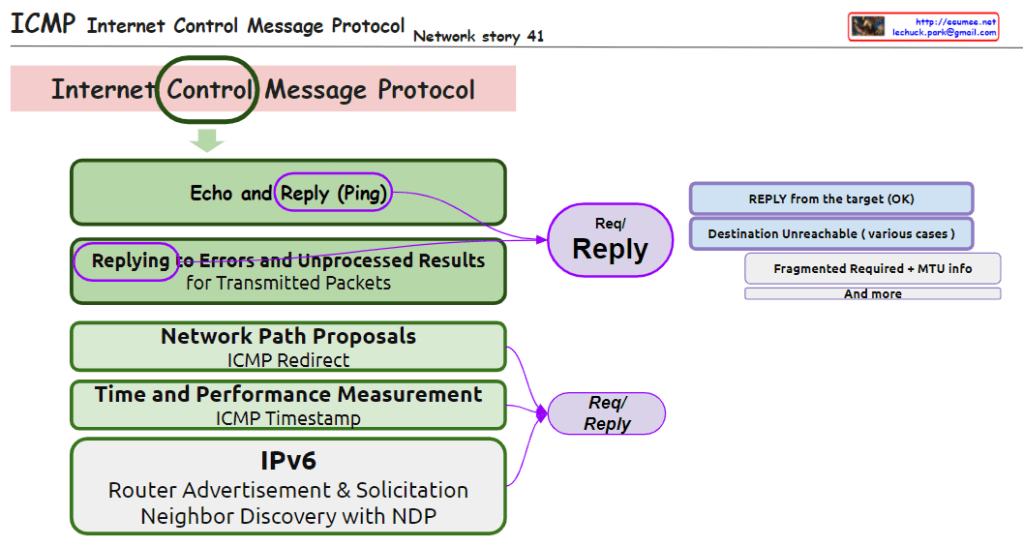
The image introduces the overarching functionality of the Internet Control Message Protocol (ICMP). ICMP serves to provide feedback when network equipment cannot further forward packets, explaining the reasons via messages indicating destination unreachable, time exceeded, parameter problems, among others. It also includes the redirect function, suggesting better routing paths between network devices, thus enhancing the overall network efficiency. Fundamentally, ICMP operates on a request and reply structure, which is essential for checking network status and diagnosing issues.

ICMP overall

From DALL-E with some prompting
This image succinctly demonstrates the essential functions of the Internet Control Message Protocol (ICMP), emphasizing the protocol’s ability to check network paths and status through simple request and response actions. This includes echo (ping) operations, error messages, network path change suggestions, timing measurements, and IPv6 functionalities, all contributing to the efficiency and performance enhancement of network operations.

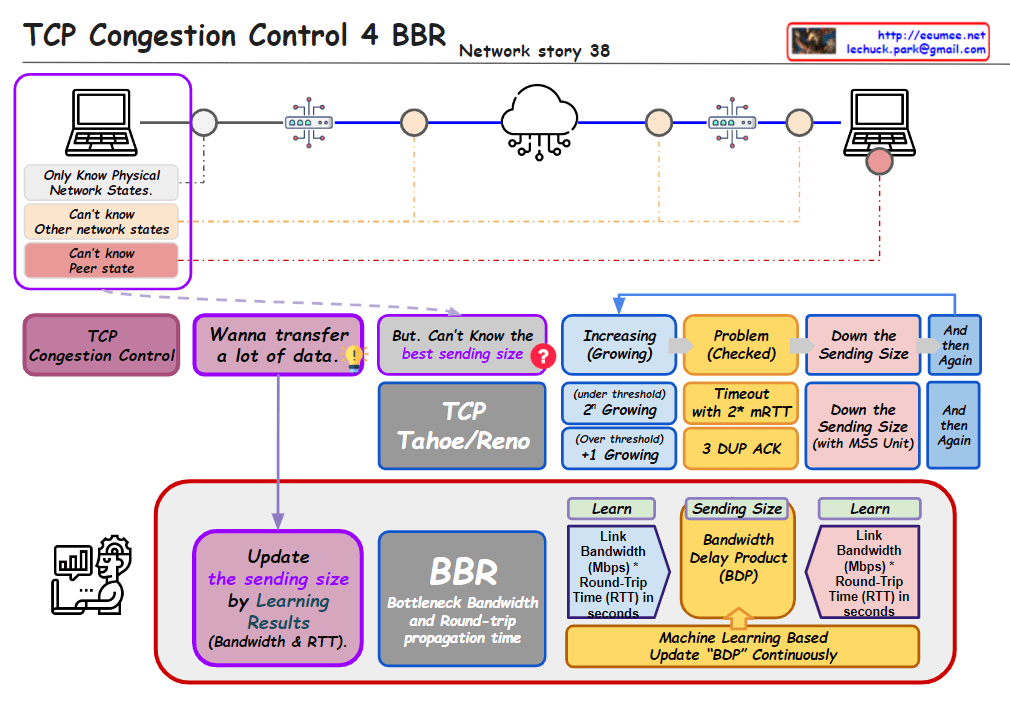
TCP vs UDP

From DALL-E with some prompting
This image explains how TCP provides reliable data transmission compared to UDP and underscores the reasons for this reliability. While UDP has a simple header structure utilizing basic port numbers and checksums, TCP includes additional fields in its header to ensure reliability. These supplementary fields encompass sequence and acknowledgment numbers for confirming data transmission and ordering, flags for connection state management, window size for flow control, and mechanisms for congestion control. The reliability of TCP is enabled through this complex header structure, with each field playing an essential role in ensuring accurate and dependable data transfer. Therefore, the reliability of all TCP communications is established through these specific fields in the header, emphasizing that TCP not just ‘enables’ reliability but ‘implements’ it in practice.

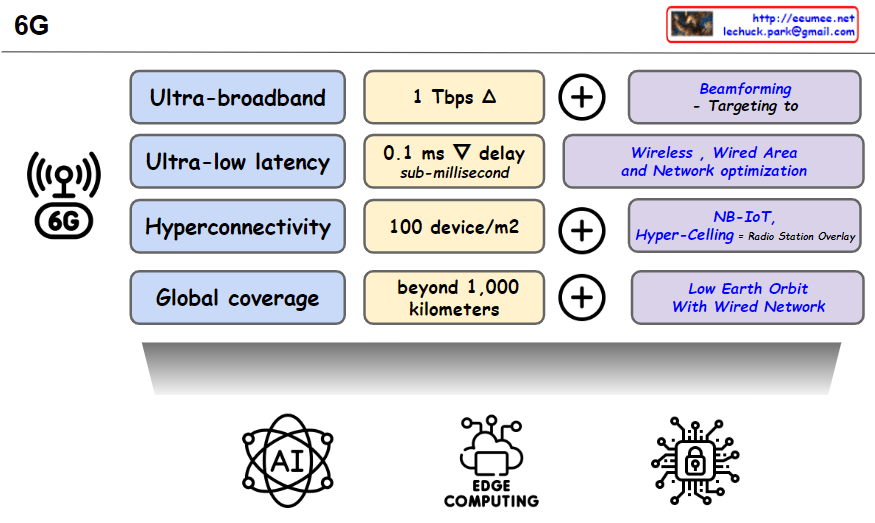
6G

From DALL-E with some prompting
The infographic details the characteristics and components of 6G wireless communication technology. It highlights key features such as Ultra-broadband with speeds up to 1 Tbps, Ultra-low latency with sub-millisecond delays, and Hyperconnectivity supporting 100 devices per square meter. It also covers Global coverage, Beamforming, network optimization, NB-IoT, and Hyper-Celling for enhanced network efficiency. Additionally, it showcases the use of Low Earth Orbit networks and the integration with AI and Edge Computing technologies.