Alarm with AI ( Development )

From DALL-E with some prompting
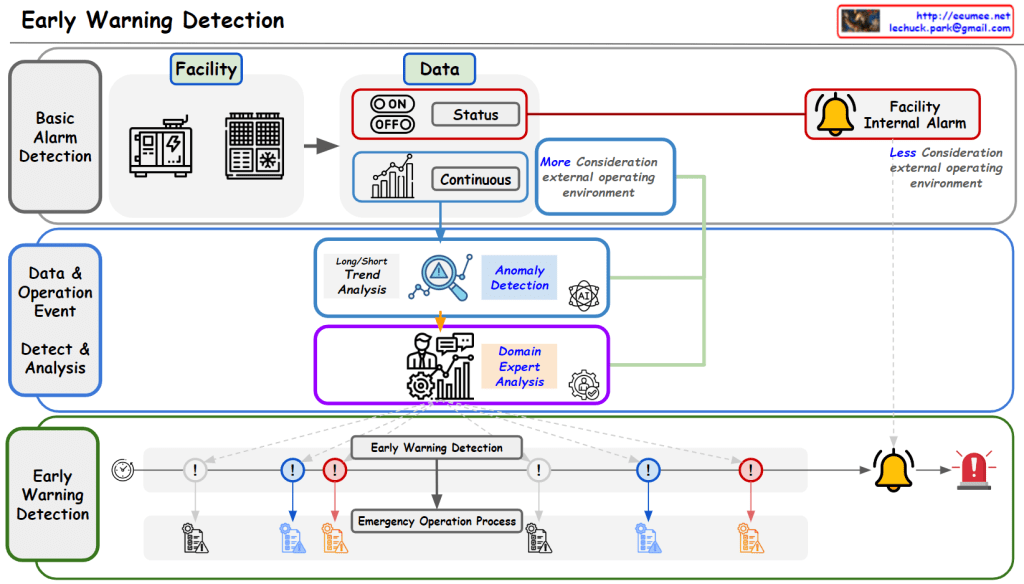
This image illustrates the implementation of an advanced alert system in facilities, extending beyond basic equipment alarms to incorporate data-driven anomaly detection, potentially utilizing AI technologies. The system engages domain experts to analyze data patterns, identifying deviations and planning for event-based responses. These events are systematized with defined levels such as alarms or warnings, and corresponding emergency operation processes are established. By considering the external operating environment, this comprehensive system enhances facility stability and operational efficiency.

Never miss an alert

From DALL-E with some prompting
The image illustrates the interaction between an alert system and a data analysis system, comprised of two distinct stages:

Raw Level Hardware (HW) Alert Detection:
This stage emphasizes internal alarms, which are hardwired to ensure that alerts are raised in critical situations without any buffering, allowing for the fastest possible alarm detection. The message “Don’t forget This Step is required” underscores the indispensability of this stage.

Analyzed Software (SW) Alert Detection:
Data passes through storage devices to analysis tools, where it can be subject to delays or potential loss. The data is analyzed by code, enabling advanced analysis with AI. However, the phrase “Even though You have a wonderful Data Analysis System” reiterates the importance of raw-level alert detection, regardless of the sophistication of the data analysis system.

Overall, the image indicates that raw-level alerts are crucial for immediate response needs, and while advanced data analysis can enhance system alerting and monitoring, it cannot replace the need for immediate alert mechanisms. The title “Never miss an alert” emphasizes the critical nature of these alert systems.