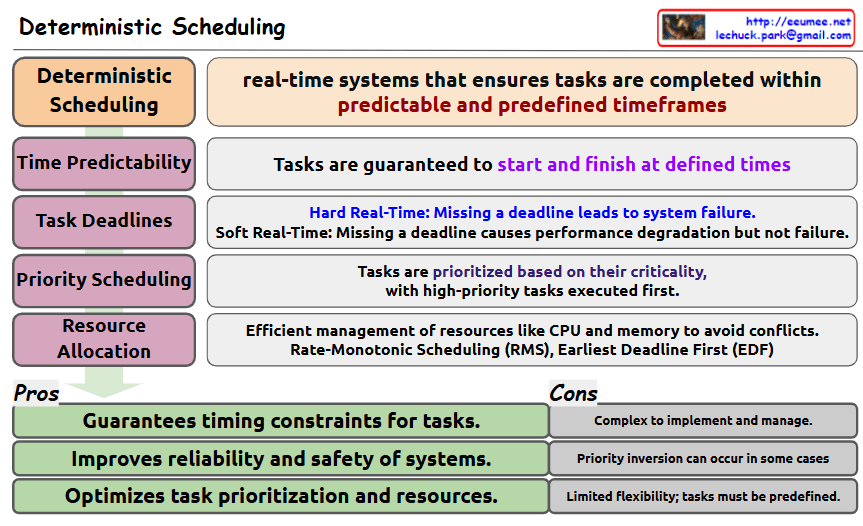
With Claude Definition: Deterministic Scheduling is a real-time systems approach that ensures tasks are completed within predictable and predefined timeframes.
Key Components:
Time Predictability
Tasks are guaranteed to start and finish at defined times
Task Deadlines
Hard Real-Time: Missing a deadline leads to system failure
Soft Real-Time: Missing a deadline causes performance degradation but not failure
Priority Scheduling
Tasks are prioritized based on their criticality
High-priority tasks are executed first
Resource Allocation
Efficient management of resources like CPU and memory to avoid conflicts
Uses Rate-Monotonic Scheduling (RMS) and Earliest Deadline First (EDF)
Advantages (Pros):
Guarantees timing constraints for tasks
Improves reliability and safety of systems
Optimizes task prioritization and resources
Disadvantages (Cons):
Complex to implement and manage
Priority inversion can occur in some cases
Limited flexibility; tasks must be predefined
The system is particularly important in real-time applications where timing and predictability are crucial for system operation. It provides a structured approach to managing tasks while ensuring they meet their specified time constraints and resource requirements.
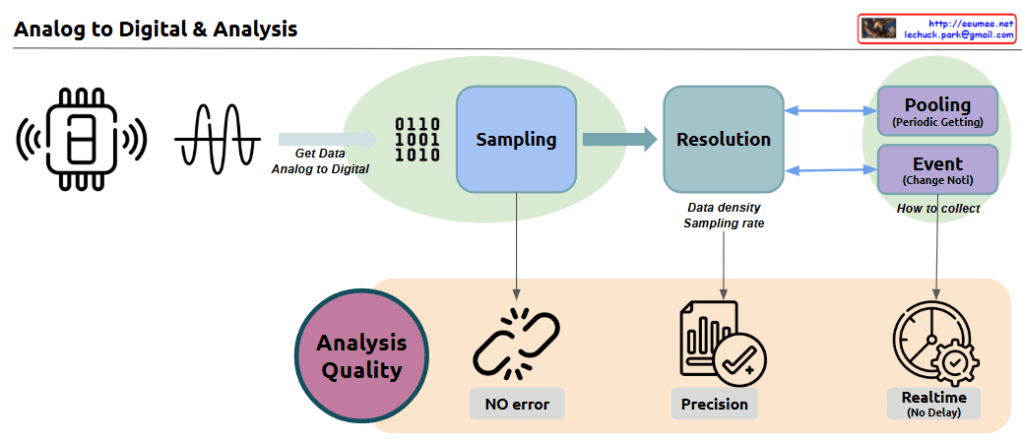
Comprehensive quality control throughout the process
Key Importance in Data Collection/Analysis:
Accuracy: Essential for reliable data-driven decision making. The quality of input data directly affects the validity of results and conclusions.
Real-time Processing: Critical for immediate response and monitoring, enabling quick decisions and timely interventions when needed.
Efficiency: Proper selection of collection methods ensures optimal resource utilization and cost-effective data management.
Quality Control: Consistent quality maintenance throughout the entire process determines the reliability of analytical results.
These elements work together to enable reliable data-driven decision-making and analysis. The success of any data analysis system depends on the careful implementation and monitoring of each component, from initial sampling to final analysis. When properly integrated, these components create a robust framework for accurate, efficient, and reliable data processing and analysis.
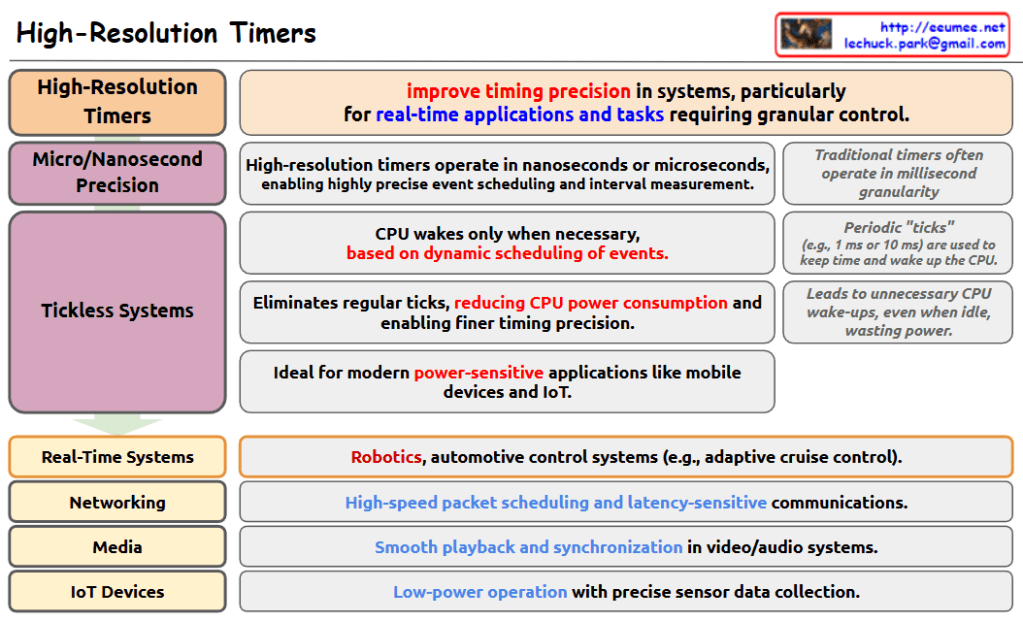
Power Efficiency: CPU activation only when necessary
Flexibility: Applicable to various fields
Reliability: Improved system reliability through accurate timing control
Future Development Directions
Optimization for IoT and mobile devices
Expanded application in industrial precision control systems
Integration with real-time data processing systems
Implementation of energy-efficient systems
This technology has evolved beyond simple time measurement to become a crucial infrastructure in modern digital systems. It serves as an essential component in implementing next-generation systems that pursue both precision and efficiency. The technology is particularly valued for achieving both power efficiency and precision, meeting various technical requirements of modern applications.
Key Features:
System timing precision improvement
Power efficiency optimization
Real-time application performance enhancement
Precise data collection and control capability
Extended battery life for IoT and mobile devices
Foundation for high-precision system operations
The high-resolution timer technology represents a fundamental advancement in system timing, enabling everything from precise scientific measurements to efficient power management in mobile devices. Its impact spans across multiple industries, making it an integral part of modern technological infrastructure.
This technology demonstrates how traditional timing systems have evolved to meet the demands of contemporary applications, particularly in areas requiring both precision and energy efficiency. Its versatility and reliability make it a cornerstone technology in the development of advanced digital systems.
With a Claude’s Help CPU Isolation & Affinity is a concept that focuses on pinning and isolating CPU cores for real-time tasks. The diagram breaks down into several key components:
CPU Isolation
Restricts specific processes or threads to run only on specific CPU cores
Isolates other processes from using that core to ensure predictable performance and minimize interference
CPU Affinity
Refers to preferring a process or thread to run on a specific CPU core
Doesn’t necessarily mean it will only run on that core, but increases the probability that it will run on that core as much as possible
Application Areas:
a) Real-time Systems
Critical for predictable response times
CPU isolation minimizes latency by ensuring specific tasks run without interference on the cores assigned to them
b) High Performance Computing
Effective utilization of CPU cache is critical
CPU affinity allows processes that reference data frequently to run on the same core to increase cache hit rates and improve performance
c) Multi-core Systems
If certain cores have hardware acceleration capabilities
Can increase efficiency by assigning cores based on the task
This system of CPU management is particularly important for:
Ensuring predictable performance in time-sensitive applications
Optimizing cache usage and system performance
Making efficient use of specialized hardware capabilities in different cores
These features are essential tools for optimizing system performance and ensuring reliability in real-time operations.

 Lechuck Park