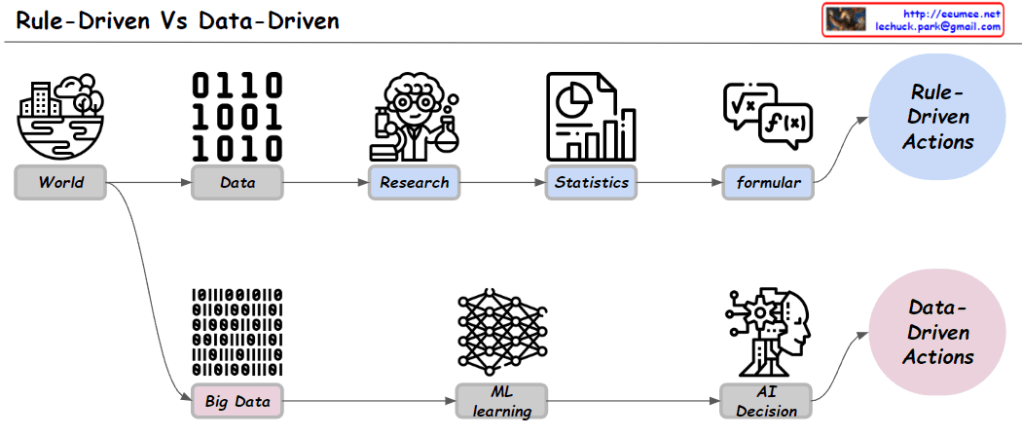
From the Bard with some prompting
Rule-based and data-driven systems are two different approaches to artificial intelligence (AI).
Data-driven systems make decisions based on data. For example, a data-driven system could be used to recommend products to customers based on their purchase history.
Here is a summary of the key differences between rule-based and data-driven systems:
- Decision-making process: Rule-based systems use if-then rules, while data-driven systems use data.
- Examples: Rule-based systems can be used for simple tasks, such as turning on a fan. Data-driven systems can be used for more complex tasks, such as recommending products to customers.
- Strengths: Rule-based systems are simple and easy to understand. Data-driven systems are accurate.
- Weaknesses: Rule-based systems can be difficult to adapt to new situations. Data-driven systems can be inaccurate if data is insufficient.
In conclusion, rule-based systems are simple and easy to understand, but they can be difficult to adapt to new situations. Data-driven systems are accurate, but they can be inaccurate if data is insufficient.

 Lechuck Park