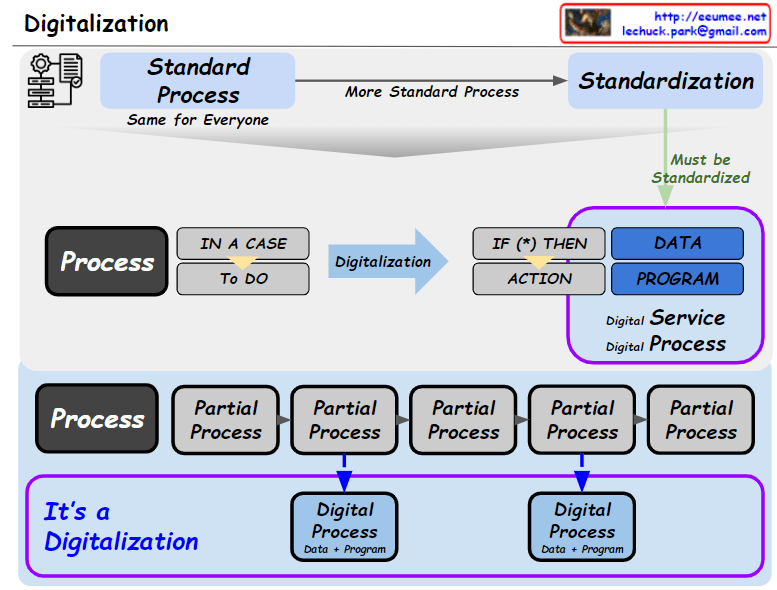
From the Bard with some prompting
The digitalization process is the process of converting analog information into digital form. This can be done for a variety of purposes, such as storing data, processing information, or transmitting data.
Digitalization process diagram
The digitalization process can be divided into five main steps:
- Data collection: This is the process of gathering the data that needs to be digitized. Data can be collected from a variety of sources, such as paper documents, files, images, or videos.
- Data preprocessing: This is the process of cleaning and formatting the data so that it can be analyzed. This may include tasks such as converting data formats, removing duplicates, or filling in missing values.
- Data structuring: This is the process of organizing the data in a logical way. This may involve storing the data in a database, or organizing it into tables or tree structures.
- Data analysis: This is the process of extracting meaning from the data. This may involve tasks such as identifying patterns, developing predictive models, or making decisions.
- Data visualization: This is the process of presenting the data in a way that is easy to understand. This may involve using charts, graphs, or maps to visualize the data.
The digitalization process can be used in a variety of industries. For example, it is used in manufacturing to track production data, in finance to analyze financial transactions, in healthcare to store medical records, and in government to track public records.**
 Lechuck Park