With Claude
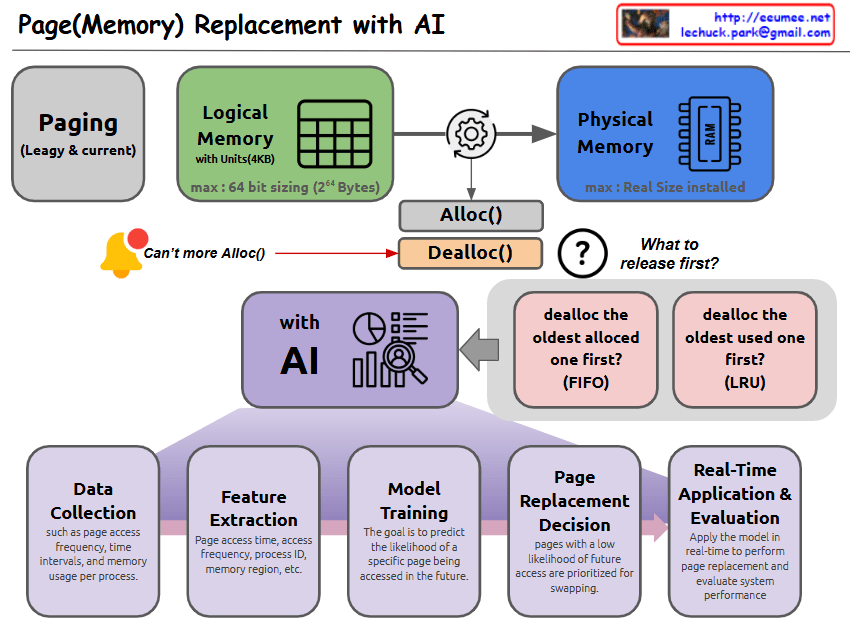
This image illustrates a Page (Memory) Replacement system using AI. Let me break down the key components:
- Top Structure:
- Paging (Legacy & current): Basic paging system structure
- Logical Memory: Organized in 4KB units, maximum 64-bit sizing (2^64 Bytes)
- Physical Memory: Limited to the actual installed memory size
- Memory Allocation:
- Shows Alloc() and Dealloc() functions
- When no more allocation is possible, there’s a question about deallocation strategy:
- FIFO (First In First Out): Deallocate the oldest allocated memory first
- LRU (Least Recently Used): Deallocate the oldest used memory first
- AI-based Page Replacement Process:
- Data Collection: Gathers information about page access frequency, time intervals, and memory usage patterns
- Feature Extraction: Analyzes page access time, access frequency, process ID, memory region, etc.
- Model Training: Aims to predict the likelihood of specific pages being accessed in the future
- Page Replacement Decision: Pages with a low likelihood of future access are prioritized for swapping
- Real-Time Application & Evaluation: Applies the model in real-time to perform page replacement and evaluate system performance
This system integrates traditional page replacement algorithms with AI technology to achieve more efficient memory management. The use of AI helps in making more intelligent decisions about which pages to keep in memory and which to swap out, based on learned patterns and predictions.


 Lechuck Park