From DALL-E with some prompting
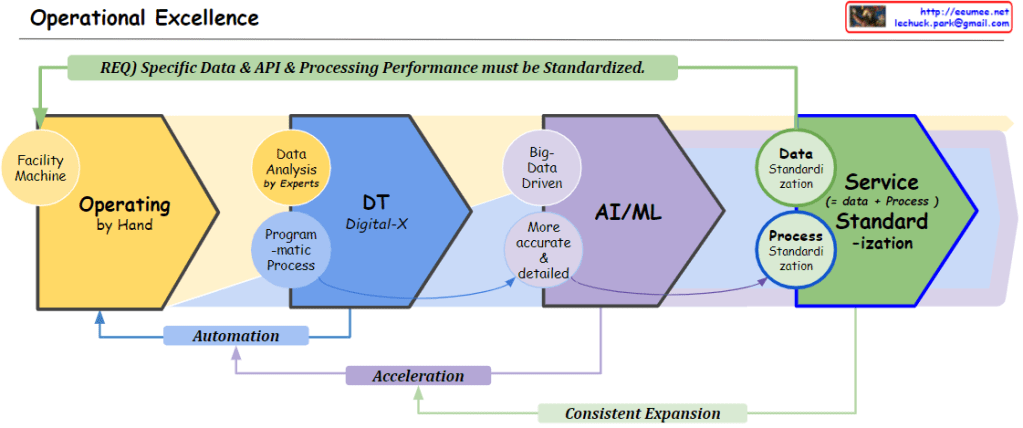
The image delineates a progressive digital transformation process aimed at achieving operational efficiency. It comprises four main stages, each incorporating specific elements and influencing improvements in the preceding stages:
- Manual Operation (Operating by Hand): This foundational stage involves the hands-on operation of facilities or machinery, focusing on the physical manipulation of equipment.
- Digital Transformation (DT): Data derived from manual operations are analyzed by experts and digitized through programmatic processes. This stage fosters automation, enhancing the efficiency and optimization of processes.
- AI/ML: The data processed through digital transformation are further analyzed with AI and machine learning technologies, driven by large-scale data to achieve more accurate and detailed insights. These analyses facilitate the acceleration and consistent expansion of processes and services.
- Service Standardization: The final stage involves standardizing data and processes based on the insights from AI/ML analysis. Essential for delivering high-quality services, it necessitates a clear definition of necessary data, its integration, and performance parameters from facilities and machinery.
Each of these stages is interdependent, with the arrows at the bottom indicating a feedback loop to the previous stages. For instance, insights from AI/ML promote data standardization, which, in turn, contributes to the improvement of digital transformation and manual operations. This creates a cyclical mechanism where each phase reinforces the others, allowing for continuous enhancement of the overall system.
 Lechuck Park